
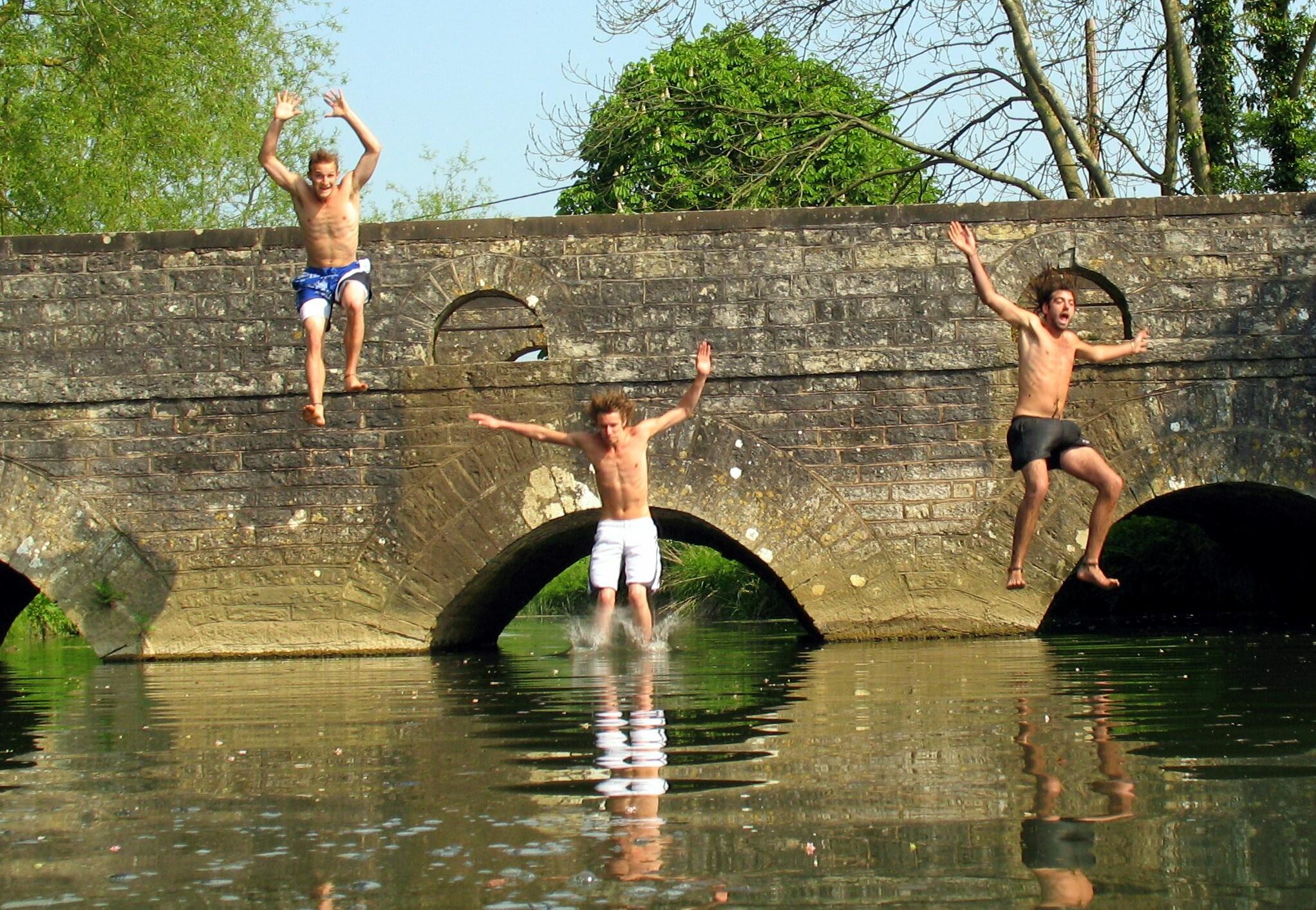
The meandering rivers of Thomas Hardy’s Wessex wind through the lush pastures of Dorset. In summer, their slow-moving waters come alive with yellow water lilies, spreading vivid colour across the river and adding to the ethereal beauty of the countryside.
The best river swims, Dorset
Camping in fields close to the Stour, I awoke to a glorious morning mist, with dew-clad spider webs hanging in the dried husks of cow parsley and tall brown bulrushes lining the banks. After sipping a hot mug of tea, I walked up to Colber Bridge on the common beneath Sturminster Newton. With little sign of life from the village above, I slid down the muddy bank and into the cool water. The shadow of gudgeon darted through the murk, and the odd weed tickled me as I swam under the bridge and down towards Bather’s Island, the site of the old river swimming club.
Swimming near Sturminster Newton
This eastern corner of Dorset, part of the ancient kingdom of Wessex, is irrigated by the River Stour. It is a beautiful, undulating landscape of chalk escarpments and downland dotted with wild flowers, ancient forests and enigmatic Neolithic earthworks
Sturminster Newton is situated at a historic fording point of the Stour as it flows through the Blackmore Vale, classic Dorset dairy country. It was at Colber Bridge that Thomas Hardy and his wife Emma spent their happiest years walking and swimming by the river. Their friend, English poet William Barnes, also lived nearby for many years and wrote about the ‘cloty Stour’ – filled with its yellow water lilies and arrowhead much as it is today – in his Poems of Rural Life in the Dorset Dialect, written in the rich, wonderful old Dorset tongue.
Swimming near Wimborne Minster
Another popular Dorset Stour swimming hole is ten miles downstream at Pamphill towards Wimborne Minster. Here, an old Roman ford, footbridge, and weir create a large space for swimmers to paddle and play.
Upstream, the waters are wider and deeper. Like many other southern English rivers, the Stour’s wildlife suffered a great decline with the intensification of dairy farming in the 1970s. Lapwing, snipe, and redshank all became rare. The river has largely recovered, but a new project – organised by the rural heritage charity Common Ground – is raising awareness of river ecology with a project to create music inspired by the river.
Ready to explore further? Discover more wild swimming and off-the-tourist-track places in the Wild Swimming book or the Wild Guide South West. There’s also Wild swimming Walks Dorset and East Devon.